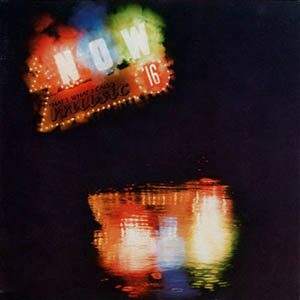
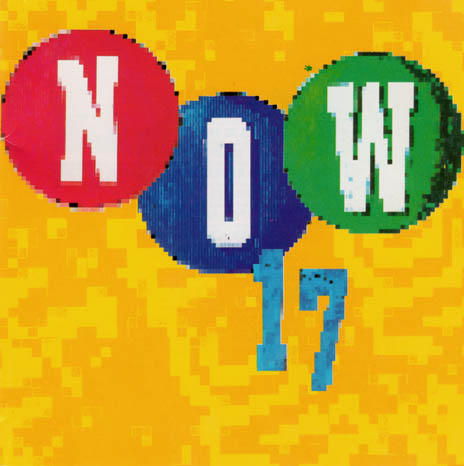
 As the first NOW album of the 90s NOW 17 promises much and delivers little, but it points the way to another world far removed from the Wet Wet Wets, Jellybeans and Johnny Hates Jazzes (?) of the late 80s. In terms of looking forward, NOW 17 gives over a whole side to the fast emerging indie-dance scene and almost all of sides three and four are dance orientated. Classic pop is curiously thin on the ground. There’s also the first computer-generated cover design. Yes… um… I’m sure in April 1990, this cover looked shockingly futuristic, reminiscent as it is of the first Doom, or Castle Wolfenstein video games; you can imagine it popping up as an end of level reward after you’ve mown down another 4,000 monsters. Also, intriguingly, “That’s What I Call Music” is almost an afterthought in the design. Had they finally cottoned on to the fact that nobody ever used the full title, so what was the point?
The featured artists on the cover are a curious mix as well. For a hip, happening pop compilation released at a time when the charts were filled with ecstasy-laden folk in Global Hypercolour t-shirts and tie-dye flower strewn hoodies, the big draws on NOW 17’s cover still include Phil Collins, UB40 and Tina Turner. His Satan-ness Cliff is on here too, but that keep that one as an evil little surprise.
Side one provides your pop injection. Erasure’s Blue Savannah has always been on my hate-list for reasons I’ve never quite fathomed; it remains there still, a dreadful way to start the album. Rebel MC’s Better World is, um, better, but is a poor follow-up to the superior Street Tuff. It only just scraped into the top 20, and only one more hit was forthcoming (Tribal Base in 1991; no, me neither). Paula Abdul’s Opposites Attract is brilliant however, and may have actually improved with age. A wonderfully upbeat rap number for the masses, it has got a small tinge of 1989 about it (but far less than some other tracks on show here) but as a party tune it’s damn good.
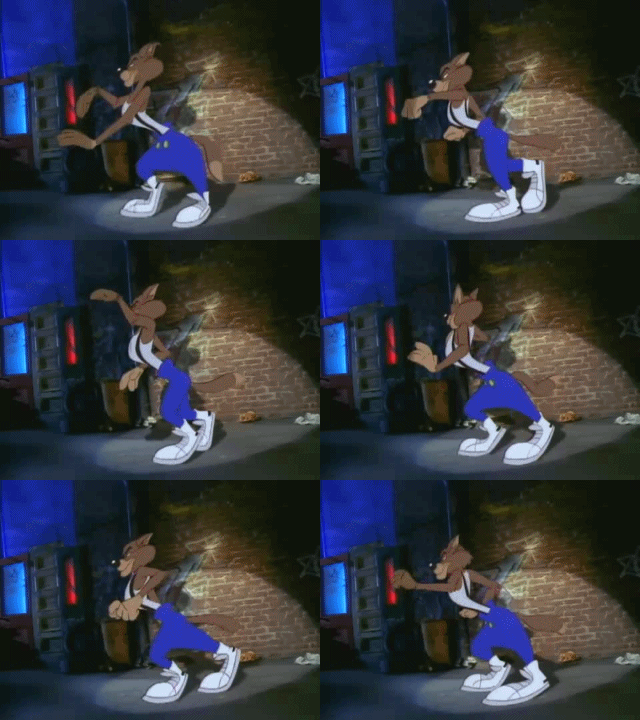
Also damn good is Beats International’s Dub Be Good To Me, which should have opened the album. It’s one of only two number ones on NOW 17, but also one of the few outright classics. Still sounding refreshing today, its brilliance lies in the ability to find disparate samples which somehow work together (a trick Norman Cook would continue to have enormous success with as Fatboy Slim) and combining that with a wonderful vocal from Lindy Layton. I’m baffled as to why her solo career never took off, despite Fatboy’s help. I’m also baffled by karaoke kings UB40’s continued chart success into the 90s. By 1990 they were only capable of having hits with other people’s songs, so they continued to churn out a succession of their Labour of Love albums at a rate of about one a month. Kingston Town has been performed worse at your local pub, but not by much.
Thankfully the world was about to be saved by Candy Flip and their Funky Drummer-led version of Strawberry Fields Forever. I’ve never been able to make my mind up about this track. Not then, when I was no doubt the target audience for it, or now when I’m a cynical, dried up husk of a man writing a sarcastic blog about how crap pop music is. I’m supposed to say how depressing it is that a group of fly-by-night kids and (no doubt) a producer with his eye on a quick buck desecrated a classic song in a trendy and wholly inappropriate way. But of course that’s utter nonsense. I’m not a fan of the Beatles’ original version anyway, which in itself was a cynical pocket money grabbing exploitation of the burgeoning late 60s drug scene, so I don’t really give a toss about Candy Flip ruining a great piece of art, because it wasn’t a great piece of art to start with. So the only concern is, is it listenable? Well, just about. It flip-flops from crass to genius with just about every drum beat, but it is a slice of 1990 that says a lot about the record industry’s desire to cash in on what the Stone Roses/Happy Mondays had started the year before. Candy Flip wouldn’t be the last act to be seduced and abandoned by the industry chasing the batik and loon-pant wearing pound, and Manchester and baggy burned out almost as quickly as it started (see also Flowered Up, The Soup Dragons, Mock Turtles et al) and at least the band had a successful afterlife, going on to work with the likes of The Charlatans and Robbie Williams, and two of them went on to form the criminally underrated Sound 5.

To follow that, we get sensible, but dull, tracks from Tina Turner and Phil Collins, who tries to perk up I Wish It Would Rain Down by chucking in a gospel choir and an axe-wielding Eric Clapton. It doesn’t work.
It’s odd to think that side two of NOW 17 is probably the most defining side of NOW in my musical education. I didn’t realise it at the time (probably because I didn’t own the album) but pretty much every track here would point forward to the next decade of my record buying. In terms of legacy, it’s probably second only to the House/Hip hop side of NOW 11 as being about as zeitgeisty as one side of a pop compilation can get. They screwed it up a bit by including The Quireboys, but there you go. In my head this was the sound of summer 1990, yet every track was released between January and April. The opening trio of Step On, Loaded and Enjoy the Silence is about as esoteric as NOW had ever been since Dr Mabuse on NOW 3. These are classics that still stand up today; yes, Step On may be a bit hoary now, but at least it will still get you dancing. The version on NOW 17 is the 7 inch single version. It’s notably different to the most commonly heard version now, the one found on Pills, Thrills and Bellyaches, and all their compilations, which is over a minute longer.
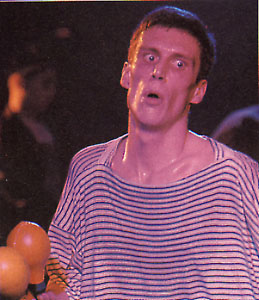
Following those three titans of indie-dance, we find a minnow of the form, Jesus Jones. Now pretty much forgotten in their native UK, they did hit it big in the USA when Right Here Right Now was used to soundtrack SCUD attacks on Iraq on CNN during the first Gulf War. Classy. EMI had high hopes for the group, seeing them as their meal ticket into the alternative scene, at the expense of several other acts, including a new group they had just signed called Blur, who are notable by their absence from NOW albums for quite a while… Real, Real, Real is a fair track that sounds like a watered down version of something Pop Will Eat Itself may have been knocking out a few years previous, or a cleaned up Carter USM track. Inoffensive chart-friendly unit shifter and nothing more.
The Inspiral Carpets were drifting into similar territory after a few years in the indie salt mines. Pretty much every group from within 30 miles of Manchester, with a pudding bowl haircut and jeans the size of a tent, was getting offered a record contract. The Inspirals at least stayed with an indie label and had a sound of their own. Clint Boon’s Hammond organ was much imitated, but he was the one who brought it back from obscurity. Hitting number 14, This Is How It Feels remains their most popular hit, even if it was surpassed, in chart terms anyway, by Dragging Me Down a few years later. On NOW 17, the track appears in its radio-friendly version, replacing the explicit lyric about the ‘guy from the top estate’ chucking himself under a train.
Chucking yourself under a train is, coincidentally, the thing that Guy Chadwick most sounds like he wants to do when singing for The House of Love. Often lumped in with the shoe-gazing crowd who found themselves sucked into the baggy vortex for a while (see also the exceptional Ride, and the not quite so exceptional Birdland), House of Love are one of the more unusual acts to grace a NOW album, a bit like seeing Tom Waits on a chill-out compilation. Shine On is a brilliant tune, probably their most well-known, and a remix of their debut single from 1987. Such wonderful song writing and talented musicianship would ultimately lead to internal fighting, booze and drugs, and everything else that stops greatness from pushing through into mainstream success. Shame.
Faith No More’s From Out of Nowhere comes from out of nowhere (sorry) and is a bit of a barn-storming relief after all that depression. It’s never been my favourite Faith No More track, but I’ve learned to appreciate it over the years and it’s certainly impossible to ignore. I’d rather ignore The Quireboys, who close off side two though. You know those bands that make a career out of ripping off another band, like Oasis did? Well, The Quireboys did that with The Faces, seemingly just because the singer sounds like Rod Stewart (and he does a bloody good job of it, too). They had a ridiculous name which ensured no kid could admit to liking them (at least at my school) without being accused of liking ‘queer boys’. They did have one good song, 7 O Clock, but that’s not the track here. Here we’ve got Hey You, and it’s a dreary, pub piano dirge that’s all roll and no rock. Imagine Rod Stewart singing a Chas n Dave number, and you’ll be almost there.

After giving us a taste of where NOW would go later in the decade, with what is probably best described as the “Indie Ghetto” (which of course, would end up redefining the term ‘indie’ to mean a sound rather than music from independent labels; acts as diverse as Kylie Minogue, The Prodigy and Bjork were all strictly indie), the second half of NOW 17 gives us the more troubling path for the series. Or to put it another way, it’s the reason why everyone, except some absolute die hards, ultimately abandon the series to seek pleasures elsewhere: pop music becomes annoying.
For reasons unknown (probably money, most things are), or better discussed by people who know about this kind of thing, pop music changed in the 1990s. I know they say that about every decade, but the status quo that had been in place since the early 60’s was pretty much abandoned by the decade’s end. Pop bands were replaced by pop producers. Pop has always had its svengalis from Brian Epstein and Andrew Loog Oldham, through Mickey Most, Pete Waterman all the way up to Simon ‘666’ Cowell. But now, the knob fiddlers were coming to the fore, thanks to cheap equipment and a succession of cheaper guest vocalists. They became the new pop stars, and groups were pushed into the shadows again. Think about it: pretty much any guitar-based band now is classed as an ‘indie’ band or an ‘alternative’ band, even if they are as successful as Muse or Coldplay. The only exception to this are bands aimed specifically at kids, like McFly and Busted, but that boat sailed swiftly by and now we’re back to pretty, non-threatening boys sitting on stools singing about kittens. Just like Garage (a term from the 60s), Indie and Alternative would soon no longer mean what they used to, and soon they would be followed by R n’ B and House too. Faceless (or anonymous faced) dance music would soon rule the roost. Sides three and four of NOW 17 are almost exclusively like this. That in itself isn’t necessarily a bad thing. We are, in 1990, a few scant years away from the Superstar DJ era, where Carl Cox, Chemical Brothers and Norman Cook were as popular as the boy bands they battled with for chart supremacy. But this is the start of that path, so instead we get a very rum bunch indeed.
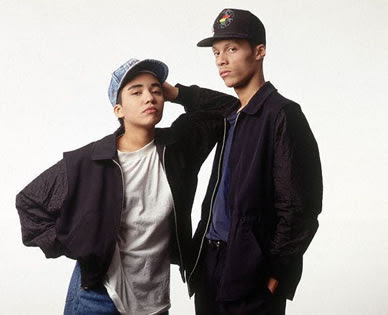
Take Technotronic… please! (boom, boom). This Beat is Technotronic is just Pump Up the Jam Part Two. In fact it IS Pump Up The Jam, just with different lyrics, sung by someone called DJ Eric. At least Lonnie Gordon’s Happening All Over Again is a great tune, one of Stock, Aitken and Waterman’s last big hits, but also one of their best. It’s probably their most successful attempt at recreating that classic disco sound for the 1980’s, sadly a year too late. Unsurprisingly the song had been written for Donna Summer, with whom they had a brief collaboration, but they had a falling out with the disco diva they did the next best thing and got a younger (and no doubt cheaper) looky-likey. I was convinced as a teenager that Gordon, like Summer, was in fact an old disco songstress that SAW had rescued from obscurity, but no; she was a just your standard session singer who happened to get noticed by the Hit Factory. As is so often the case, Gordon never capitalised on the top 5 success of this excellent track and the dumper beckoned.
Disco morphs into Hi-NGR with Jimmy Somerville and Cliff Richard (separately, sadly). Read My Lips is a much better plea for sexual tolerance than the awful There’s More To Love (featured on NOW 12) and continues the brash fabulousness of Somerville’s earlier cover of Sylvester’s You Make Me Feel (Mighty Real), a top 10 hit which would have sat much better on this album. In a similar vein is Cliff’s Stronger Than That, the best track from the album of the similar name. That doesn’t mean it’s any good, because it’s not, but it doesn’t make you want to murder people who were to play it like you did when you heard I Just Don’t Have The Heart (see NOW 16).
The anonymous side of things come into play next with the 49ers forgettable Don’t You Want Me, Jamtronik’s awful dance version of Phil Collins’ Another Day in Paradise, and the strange, if not exactly pleasant, JT and the Big Family’s Moments in Soul.
Jamtronik represent a virus that spread across the charts in the 90s and is a throwback to the days of the Top of the Pops and Hot Hits albums: the cheap, nasty cover version knocked together, probably, in a couple of hours. The difference between these bikini-clad clones and those the 1970s (apart from the fact that quality dolly birds like Mary Millington and Caroline Munro were absent) is that they were dance versions, sounding like they’d been knocked up with a £50 Casio keyboard and an Atari ST computer, so they didn’t even have to sound that much like the original. Another Day in Paradise is one of the most offensive singles ever recorded anyway: multi-millionaire pop stars should not make more millions by exploiting other people’s problems, not unless they are prepared to do something about it. This wasn’t a charity record, remember. So, a dance version, for pilled up clubbers, of a trite, opportunistic ode to Britain’s disposed, written by a man who could solve problems like this with a quick waft of his tax-avoiding chequebook? Sorry, got nothing spare, mate.

Moments in Soul is slightly odd though and that makes it worth a listen. A kind of dance megamix of recent hits, it manages to combine Art of Noise’s glorious Moments in Love, Soul II Soul’s Back to Life and Milli Vanilli’s Girl You Know It’s True into something listenable. Moments in Love seems an odd basis for the track, being 8 years old by this point, and strangely never a top 40 hit despite several rereleases. Side 3 does close on a high note, thanks to the still brilliant Got To Have Your Love from Mantronix. The production may date this a bit (particularly the horrible synthesised horns) but it’s a pretty great track all the same.
Side four is a similar hotchpotch of the good, the bad and the ugly. The good is supplied by Adamski’s Killer, featuring, or course, a very uncredited Seal; Orbital’s Chime, giving little indication of the influence they would have over UK dance music for the next two decades; and Electribe 101’s Talking With Myself. Add in E-Zee Possee (sic) featuring MC Kinky (!) with Everything Starts With An E, which sounds nowhere near as dreadful as I thought it would, despite loving it in my teens, and side four looks like it might be shaping up pretty well. But deep and frightful horror awaits.
Side four begins with Bizz Nizz (an act who somehow managed to be one of the featured artists on the cover) with Don’t Miss the Partyline. Like many dance artists who would appear on NOW albums, this was Bizz Nizz’s only hit, and it did well reaching number 7. But it’s utter crap. And not in a novelty record kind of crap. It’s lazy, money-grabbing, soul-less crap. You think Simon Cowell has the monopoly of conning the kids out of their paper round cash with insipid rubbish (and I do)? Well, he’s only doing what Euro-dance producers (and a few UK ones) have been doing for years before. Partyline features a very basic keyboard melody of about three notes, crowd noises, and a bloke (presumably, a DJ) shouting about the Partyline (this was the golden age of late night TV-advertised chat lines, maybe that was the market they were tapping) and the occasional “are you ready?”. Techno was still in its infancy, so this kind of Diet Techno cleaned up on the charts at the time, being much easier listening (and radio-friendly) than the likes of LFO. And you know what else makes this so dreadful? The guys behind it went on to create 2 Unlimited. Be afraid…
The rest of side four is never as downright nefarious as that, but is a showcase of where 1990’s dance scene was at: in the toilet. Well, that’s the impression given here anyway. I can’t really say how representative it is.
D-Mob’s Put Your Hands Together sounds a year too old to be in this company; Tongue N’ Cheek’s Tomorrow is so utterly forgettable I’ve listened to it at least ten times preparing this review and still can’t remember a thing about it; and the least said about Sydney “Who?” Youngblood’s awful cover of I’d Rather Go Blind the better, except it’s probably the worst cover version NOW has featured thus far. And the worst album closer so far, to boot.
It must be said, NOW 17 does do a great job of capturing the chart mood of the first third of 1990. It’s as disparate and confused as the charts themselves, as maybe it should be. If the kids were strating to buy into the ‘alternative’ (both indie and dance) then where was that going to leave the pop staples like Stock, Aitken and waterman, Cliff, Tina Turner… maybe even Erasure?
As I said earlier, pop was changing, becoming more fractured than ever before, with more genres and sub-genres. NOW was never going to be able to provide an accurate cross-section of the popular movements as it tried to here. A break was once again required, and there would be no new NOW album in the summer of 1990. Christmas would see its return, along with a bold, and potentially disastrous, new look. It was time to wave goodbye to NOW’s balls.
NOW THAT’S WHAT I CALL MUSIC 17
Release date
23rd April 1990
Biggest tracks
Dub Be Good To Me – Beats International
Killer – Adamski
Step On – Happy Mondays
Loaded – Primal Scream
Forgotten tracks
Got To Have Your Love – Mantronix
Opposites Attract – Paula Abdul (MC Scat Kat is not credited…!)
Track listing
| Side One | |
| Blue Savannah | Erasure |
| Better World | The Rebel MC |
| Opposites Attract | Paula Abdul |
| Dub Be Good To Me | Beats International feat. Lindy Layton |
| Kingston Town | UB40 |
| Strawberry Fields Forever | Candy Flip |
| I Don’t Wanna Lose You | Tina Turner |
| I Wish It Would Rain Down | Phil Collins |
| Side Two | |
| Step On | Happy Mondays |
| Loaded | Primal Scream |
| Enjoy The Silence | Depeche Mode |
| Real Real Real | Jesus Jones |
| This Is How It Feels | Inspiral Carpets |
| Shine On | House Of Love |
| From Out Of Nowhere | Faith No More |
| Hey You (Live) | The Quireboys |
| Side Three | |
| This Beat Is Technotronic | Technotronic featuring MC Eric |
| Happenin’ All Over Again | Lonnie Gordon |
| Don’t You Love Me | The 49ers |
| Read My Lips (Enough Is Enough) | Jimmy Somerville |
| Stronger Than That | Cliff Richard |
| Another Day In Paradise | Jam Tronik |
| Moments In Soul | J T & The Big Family |
| Got To Have Your Love | Mantronix Featuring Wondress |
| Side Four | |
| Don’t Stop The Partyline | Bizz Nizz |
| Everything Starts With An ‘E’ | E-Zee Possee |
| Put Your Hands Together | D-Mob & Nuff Juice |
| Killer | Adamski Featuring Seal |
| Chime | Orbital |
| Tomorrow | Tongue N Cheek |
| Talking With Myself | Electribe 101 |
| I’d Rather Go Blind | Sydney Youngblood |