Tag: Paula Abdul

  • NOW 21 – It’s got an ‘ology. A V-I-B-E-ology

    NOW 21 – It’s got an ‘ology. A V-I-B-E-ology

    Now_21Like 1988 before it, 1992 is not one of those banner years in the annuls of music. Flipping through the ‘1992 in music’ page on Wikipedia turns up such nuggets as Kurt Cobain and Courtney Love got married, Kylie parted company with Pete Waterman and Billy Idol punched a woman in the face. Three of pops darkest days I’m sure you’ll agree. Musically it is devoid of much worth commenting on. 1992 did see the release of Hiphoprisy Is The Greatest Luxury, Sugar’s Copper Blue and Take That and Party, but it also begat The Bodyguard soundtrack, still one of the biggest selling albums of all time. You idiots. The accepted wisdom is that 1992 (and to some extent, 1993) are the dark hinterlands between the grunge ‘explosion’, which generated just three top ten hits, and 1994’s birth of Britpop (copyright 6Music for the whole of this year), which ruined everything. And judging by NOW 21, those sorts of people who get asked to discuss the merits of Right Side Fred versus The Breeders on BBC Four filler shows are absolutely right: 1992 smells worse than teen spirit.

    As seen on 'I'll Say I Love Any Kind of Music for £250 plus exees'
    As seen on ‘I’ll Say I Love Any Kind of Music for £250 plus exees’

    NOW 21 is the last NOW album I have any experience of in the real world. Whilst I was now fully ensconced in a world of John Peel, the NME and whatever my now-moved out brother was sticking on C90s for me, a friend of mine had NOW 21 on CD and insisted on putting it on whenever I was at his house. I hated it at the time, and was only interested in the Jesus and Mary Chain track mainly because it seemed so out of place. It wasn’t a patch on the JAMC stuff I was listening to at home, but I just couldn’t understand why Far Gone and Out was on it. My mate didn’t care and insisted on only playing Bohemian Rhapsody and Mr Big’s Be With You. I never did keep in touch with him when I left school. Can’t think why.

    NOW 21 is top heavy with number ones, but sadly shoots its wad too early. It begins with Bohemian Rhapsody, re-released the previous Christmas as a tribute to the death of Freddie Mercury, making it the only song to score a Christmas number one twice, in the same version. You know this back to front so there’s little point in me discussing it further.

    We Wet Wet’s Goodnight Girl does warrant a bit of further discussion. Like With a Little Help From My Friends, this is probably long forgotten as a Wets’ number one, but top spot it did reach. No idea why though. It’s a trite, piano-based soufflé of a song which features no drums whatsoever. That’s a no-no in my book. It also has, to my ears at least, some rather suspect lyrics: “I won’t tell a soul, I won’t tell at all, Do they have to know about my Goodnight Girl”… make of that what you will.

    Far more wholesome, if nonetheless bonkers, is the triumphant return of Shakespeare’s Sister. Stay is just so wonderfully hat stand that you can’t help but love it. I’m sure most of those who pushed it to number one are the same kind of people who made Babybird’s You’re Gorgeous a hit, i.e. people who don’t really listen to music. Of course, Stay makes no sense without its video, which makes the fact it was so popular even more amusing. I wonder what cultural historians of the future will make of this one.

    They’ll have far more fun dissecting that one than they will explaining the continued success of Simply Red, who offer us Stars this time round. That’s preceded by the albums token “song from a hit movie”, with the Temptations My Girl, and followed by The KLF’s Justified and Ancient, a re-recording of the final track from their White Room album, with new vocals from Tammy Wynette. As a fan of the original album version, I’m not keen on this, and see it as the KLF taking their joke to the extreme where it becomes irritating rather than amusing. The fact that it was in the running for the Christmas number one in 1991 was probably the point. The KLF will, amazingly, feature again later.
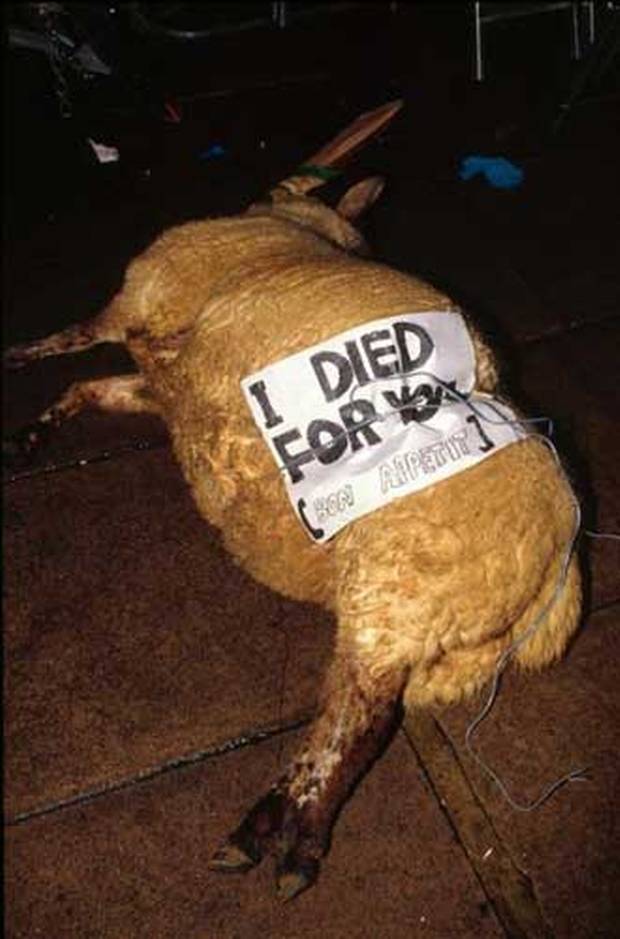
    Justified and ancient
    Justified and ancient

    Madness provide the third re-release on side one. It Must Be Love is great, obviously, but it does make you start to wonder if there was anything new that was good about at the time. The fact that Genesis could score top ten hits in 1992 probably means the answer is no. I Can’t Dance is one of those songs that was probably more successful as a result of its (admittedly, through gritted teeth) amusing video, taking the piss out of Levi commercials, than it was for the inherent merits of the song itself. Julia Fordham’s Love Moves in Mysterious Ways is, possibly, the token act being plugged on side one. A fairly forgettable piano-based dirge, it’s not particularly memorable even given Fordham’s slightly odd vocal recalling Beverly Craven’s much better Promise Me, with hints of the heavy breathy type of singer that would become popular when Mariah Carey started selling millions. I’m amazed more X Factor finalists haven’t given this a pop; it’s right up their street as an example of fragile yet strong singing. Oooo-oooh.

    The next half does get better, eventually, but takes its time getting there. Crowded House’s Weather With You is always embedded in my mind thanks to an impromptu sing-along on the last day of school, when someone decided it was a perfect way to say our goodbyes to everyone, whilst I was writing sub-Pixies lyrics in everyone’s ‘Farewell Journals’ or whatever the hell they called them.

    Deeply Dippy, the final number one on the album, has survived pretty well, I think. It’s a cracking pop tune which never seems to get any respect. If Ian Dury had written and performed that exact same song, everyone would say it was a masterpiece. I think it’s almost a masterpiece, with only the slightly weedy brass section holding it back.

    The afore-mentioned Mr Big is next with their horribly hand-clappy sing-a-long-a-barnyard Be With You. An unbelievable hit at a time when grunge was supposed to be ruling the charts, this recalls the worst of the likes of John Cougar Mellancamp and other US country-rock acts that you only know the names of if you ever watched America’s Top Ten. We Brits can conjure up our own insipidness though, thanks to Everything but the Girl, once again scoring a surprise hit with a cover version a few years before they had their trip-hop renaissance which they were working on at the same time as Tracey Thorn was providing vocals for Massive Attack. Honest. Just as forgettable is Roxette’s Church Of Your Heart. You know this is a duffer because the bloke sings it.

    I said things got better. Well not quite yet. Bryan May’s Driven By You stinks up the speakers next. With this May makes his second appearance on a NOW album. Just like he did on NOW 19. Christ. Driven By You, younger viewers may not know, was especially written for a Ford car commercial (no doubt to one up Vauxhall who had been having great success using the riff from Eric Clapton’s Layla for a few years). In the ad, it sort of worked, as a Top Gear, petrol-head, greasy overalls theme to shots of jets, R and D departments, Transit vans and the like. As a song, it fails miserably mainly because May seems to have forgotten to change the lyrics from ‘everything WE do’ to ‘everything I do’ for huge sections of the thing, even confusing matters by saying ‘we’ and ‘I’ in the same sentence. So is he singing to Anita Dobson about how together, everything they do is driven by her? Or is he suggesting that the Ford Corporation of America are responsible for the continued married bliss they share? I’m none the wiser.
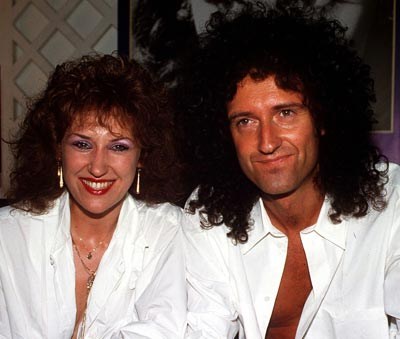
    Hair
    Studio Line

    So, to the good stuff, and there’s very little. The Wonder Stuff appear for the second NOW in succession with the jolly Welcome to the Cheap Seats (with uncredited Kirsty McColl on backing vocals).The incongruous Far Gone and Out follows it, to the bafflement of a nation of teenage NOW buyers. It’s C-grade Jesus and Mary Chain (as was most of the album, Honey’s Dead), but it’s still miles better than most of the crap on offer here. JAMC were on a Warners subsidiary, so one can only assume this was a potential sop to grunge, having failed to snag a Nirvana or Pearl Jam track for inclusion. I’m speculating wildly here, but you have to but this makes no sense at all.

    James’ Born of Frustration is a bit more at home, its rallying warble still sounds great. It’s better than Sit Down anyway (though most James singles are). The first half finishes off with one of the rare appearances for The Cure. High sounds like pretty much every Cure song, with that twangly guitar, lyrics tumbling from Robert Smith’s gob, and mention of a cat. Textbook stuff.

    Textbook could also describe the running order of CD 2.  Apart from the now standard ditching of some odds and ends at the finale, and one hilarious hand grenade of a track, it’s dance all the way, kicking off with Shanice’s I Love Your Smile. Even a cold hearted cynic like me can appreciate how nice this is, but that’s also its problem: it’s sickeningly nice. And you hum it for hours afterwards. The Pasadena’s cover of I’m Doing Fine follows, bringing banality to the niceness of Shanice to produce a horribly soul-less version of the soul classic. I never got on with these guys at the time, finding their reappropriation of soul legends for their own ends cheap and tacky. My opinion has not changed.

    Next up, one of Kylie’s forgotten hits, despite it reaching number 2 at the time. Like The Pasadena’s, Give Me Just A Little Bit More Time is a drab soul cover with uninspired SAW production (without the A this time) and a horribly strained vocal from Ms Minogue, who by the year’s end, would be finally stepping out from under the Hit factory’s wing. On this evidence, not a moment too soon. The cover versions continue with East Side Beat’s Ride Like The Wind. It’s a surprisingly listenable track, sounding every inch the forefather of the likes of D:Ream and similar chart botherers who would go on to litter the charts (and NOW albums) in the coming years. It’s an Italian DJ re-working a Christopher Cross non-hit (in the UK at least) from 1979. The original is a late era disco track from the time when everyone was releasing disco records (i.e. when they got rubbish). ESB’s version adds a slightly ballsier vocal and more bass, but essential they aren’t that different.

    The Daddy Mack'll make you... JUMP! JUMP!
    The Daddy Mack’ll make you… JUMP! JUMP!

    That’s followed by the Fisher Price hard house of 2 Unlimited with the forgettable Twilight Zone, which doesn’t even sample the Theme from The Twilight Zone. Idiots.

    Thankfully, all that nastiness is firmly blown away by the musical equivalent of a photobomb thanks to the compiler dropping KLF’s America (What Time Is Love) into the mix and showing everyone else on the record how to produce ball-busting dance music. Yes, it’s another cover version on a side filled with them, but at least it does something different to the original chart version (which in itself is only one of various versions of the track). Featuring the riff from Ace of Spades and the singer from Deep Purple, along with a hellish choir, a ludicrous prologue…you need to hear the full 9 minute version to appreciate this tune’s almighty power, but even the truncated radio version here is enough to satisfy. It’s also crying out for someone more talented than me to mash it up with Neil Diamond’s America.

    We continue with two pretty good tunes: Civilles and Coles’ Deeper Love sounds like the kind of thing that would have inspired a fair few people. It’s got some swing to its standard house beat and a really good sassy vocal to add some grit to this particular oyster, not sure about that protracted ending though. It’s not one I particularly liked in the day, but sounds pretty good now. As does Opus III A Fine Day. What both these tracks have is the inability to date them. Deeper Love could be from anywhere between 1987 and 1995. A Fine Day, too, is fairly impossible to pin down. I was genuinely surprised to see it on this album, thinking it at least a year younger than 1992. This has turned up on at least two Pete Waterman compilations even though he had bugger all to with it, other than it was released by his PWL label.

    Erasure’s Breath of Life seems a little out of place in this kind of company, and it’s clear from their lowly position midway through CD2 that their star was starting to wane for the record company. Including them was still obligatory because they were still having top 10 hits (and would continue to do so for another decade) and it’s a great tune, it’s just unfortunate that former album openers now found themselves in the pick n mix bin, next to McHammer, stinking up the charts with the god-awful Addams Groove. Produced to promote the Addams Family movie, it desecrates the original famous theme, but at least has the grace to bury it in the mix so much you can barely hear it. By this point he’d dropped the Mc, so this was credited as just Hammer on the single, which would prove to be his last top 10 hit, with only one further single (something called Do Not Pass Me By, hopefully a cover of the Ringo Starr composition) even breaching the top 40. And no one cared. The pop-rap vibe continues with Salt n’ Pepa’s Expression. Clearly inspired (i.e. ripping off) Madonna’s Express Yourself, this is all about getting the sisters to do it for themselves and “believe in me”. I’m not quite sure how “come on and work your body” fits into this proto-Girl Power theme, but there you go. It’s not aimed at me so I’m not meant to get it. By this point any innovation S n P may have once showed has long gone, and they are now sounding like almost every other ‘new jack’ R n’ B act starting to occupy the UK charts at the time. Like Ce Ce Penniston who followed up the wonderful Finally, with the bland and by-the-numbers We Got A Love Thang (god, even typing that made me cringe). Meh.
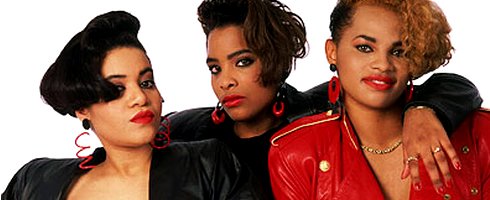
    Seasoning in the sun
    Seasoning in the sun

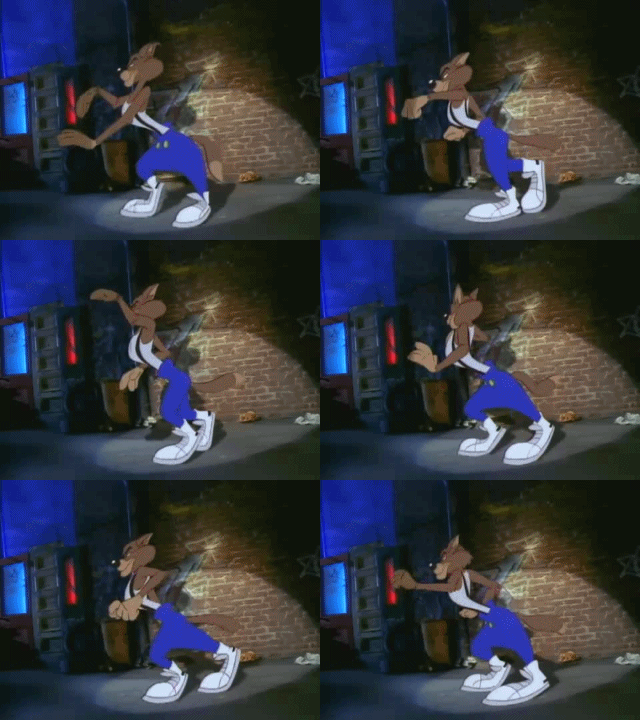
    The next track is thankfully odd enough, if not necessarily any good, to elicit some interest: Paula Abdul’s Vibeology. It’s a little strange that such an odd thing would turn out to be her best track since Straight Up. I suspect it’s the result of some studio off cuts that didn’t quite make a whole song, being handed over to a producer to slap together. It’s a world away from the dreary ballads she seemed to have made her stock in trade, and pointed to a new direction she could have taken. If Madonna had recorded this, it would still be the subject of academic studies. As it is it’s left as a curious mix of sex, funk, juvenile humour, schoolgirl excitement and Paula’s Bart Simpson impression (“Let’s do it!”). I like it but I’m not sure why, as it’s not good in any sense of the word as I understand it.

    The final dancey track is Alison Limerick’s Make It On My Own. This is one of those tracks that seemed to be forever laying in the ‘fun’ pubs and would be wine bars of my home town, at the time when I was first experimenting with fake IDs. It’s very good and worth having a new listen to.

    But it’s all downhill from there: Tina Turner’s Way of the World starts off sounding like Let’s Stay Together… just like Be Tender With Me Baby did on NOW 18! It’s as a beige as a newly refurbished flat on Homes Under the Hammer, and just as mercenary. Ms Bullock had ceased to be relevant to NOW and its listeners for a while now so her inclusion with a number 13 hit, from 5 months previous, that barely anyone remembered at the time, let alone now, seems like unnecessary padding. At least Curtis Stigers’ I Wonder Why was a big hit. Its inclusion is at least understandable, even if the song is all kinds of wrong. Lounge-jazz sax invades this penthouse ballad with all the subtlety of a thrown brick and with even less charm. It sounds like the theme to a long forgotten yuppie soap opera about people who stare out of their high rise apartment windows across a city that doesn’t understand them anymore, high paid jobs they hate but which they can’t live without and relationships so convoluted you end up marrying yourself. Twice. Stigers has a very strange voice too, like he’s got a permanent bit of phlegm vibrating in the back of his throat he’s long since given up trying to dislodge. Listened to on headphones, there’s a constant rattle in the background that convinces you your Sennheisers are bust. Again.

    NOW 21 breathes its last with one of the most insipid ballads, in a long history of insipid ballads, which the series has served up so far. Diana Ross’ When You Tell Me That You Love Me sounds like it was released in the early 80s, like it was a rejected song from a Lloyd Webber musical. She sounds like an X Factor finalist rather than one of the most successful soul singers we’ve ever had, and with its pointless key change, synthesised orchestra and choir filled finale, it has all the charm and heart of a Michael Bay movie. This managed to hold off KLF in the battle for Christmas number 1991, but its huge sentimentality was no match for the death of a national treasure. According to Wikipedia it missed the top shot by only a couple of hundred units. Ross tried to rectify this a decade later by re-recording it with Westlife, of all people, but that also stalled at number two. Oops.

    So, is the perceived wisdom right? Is 1992 a dark, post-apocalyptic wasteland of pop nothingness? On this evidence, the answer is definitely yes. NOW 21 isn’t the whole story of the year (it’s not even the whole NOW story of the year) but as a snapshot of where things were it seems the public loved their cover versions, corny love songs and re-releases. But, there’s nothing resembling grunge here and no sign of the great British backlash to come, so what exactly are all these commentators banging on about on 6Music at the moment?  1992 is simply shaping up to be one of those forgettable years. Isn’t it?

    Yes, that is the then voice of the Official Top 40, Mark “Goodie Bags’ Goodier, replacing ‘The Kid’ as the voice of NOW, where he remains to this day.

    NOW THAT’S WHAT I CALL MUSIC 21

    Release date

    13th April 1992

    Biggest tracks

    Bohemian Rhapsody – Queen

    Stay – Shakespeare’s Sister

    Lost gems

    America: What Time Is Love? – The KLF feat. The Children of the Revolution

    Vibeology – Paula Abdul

    Forgotten tracks

    (Love Moves In) Mysterious Ways – Julia Fordham

    We Got a Love Thang – Ce Ce Penniston

    Make It On My Own – Alison Limerick

    Way Of The World – Tina Turner

    Worst Track

    Addams Groove – Hammer

    What’s missing?

    Everybody In The Place – The Prodigy

    God Gave Rock n Roll To You – KISS

    Movin’ On Up – Primal Scream


    Track listing

    CD1
    Bohemian Rhapsody Queen
    Goodnight Girl Wet Wet Wet
    Stay Shakespears Sister
    My Girl The Temptations
    Stars Simply Red
    Justified And Ancient The KLF featuring Tammy Wynette
    It Must Be Love Madness
    I Can’t Dance Genesis
    (Love Moves In) Mysterious Ways Julia Fordham
    Weather With You Crowded House
    Deeply Dippy Right Said Fred
    To Be With You Mr Big
    Love Is Strange Everything But The Girl
    Church Of Your Heart Roxette
    Driven By You Brian May
    Welcome To The Cheap Seats The Wonder Stuff
    Far Gone And Out The Jesus & Mary Chain
    Born Of Frustration James
    High The Cure
    CD2
    I Love Your Smile (Driza Bone Remix) Shanice
    I’m Doing Fine Now The Pasadenas
    Give Me Just A Little More Time Kylie Minogue
    Ride Like The Wind East Side Beat
    Twilight Zone 2 Unlimited
    America: What Time Is Love? The KLF featuring The Children Of The Revolution
    A Deeper Love Clivilles & Cole
    It’s A Fine Day Opus III
    Breath Of Life Erasure
    Addams Groove Hammer
    Expression Salt ‘N’ Pepa
    We Got A Love Thang Ce Ce Peniston
    Vibeology Paula Abdul
    Make It On My Own Alison Limerick
    Way Of The World Tina Turner
    I Wonder Why Curtis Stigers
    When You Tell Me That You Love Me Diana Ross


  • NOW 20 – Giant Floating Letters in Space

    NOW 20 – Giant Floating Letters in Space

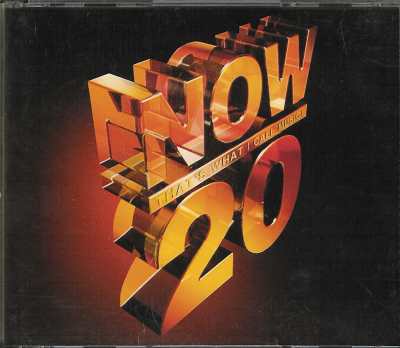
    Now_20One of the fun things about this blog is the amount of misremembering I’ve been doing; you know that weird feeling you get when you are utterly convinced of something from your past despite all the evidence to the contrary. Like me thinking the NOW pig lasted for years rather than just three albums, that Bros’ I Owe You Nothing was on NOW 11, or that NOW 16 was any good. The biggest mis-memory (if that’s a real word) on my journey so far is the 1990s changing of the guard at Radio 1, that glorious time when Matthew Bannister came in and did away with the Smashie and Nicey brigade. He decided that the station that’s y’know, for kids, should really appeal to, y’know, kids and it was time for The Hairy Cornflake to pack up his Quack Quack Oops and Batesy should concentrate on his video certificate introductions (which are there to help you make the right choice, thanks for listening). Regular readers may have noticed I’ve been building up to it for quite a while, the first mention coming way back on NOW 8, and the inclusion of Queen’s Innuendo as the last track on NOW 19 seemed to perfectly dovetail in my mind with the changing of the guard over at NOW Towers as well, with the GIANT FLOATING PERSPEX LETTERS IN SPACE replacing whatever you called that abomination that had adorned the previous two covers.

    But it transpires I was wrong. TWO YEARS wrong. It wasn’t until 1993 that the axe was swung and Radio 1 changed forever. So, for at least another two years, the charts, and consequently NOW, would continue to lead strange pot pourri lives, despite the best efforts of Belgian techno producers eyeing the charts like so many Bond villains eye killer missiles.

    NOW 20 is nothing if not eclectic. Dance is not as prominent as it had been on the previous few releases, there’s some absolute corking tunes, and there’s no Bryan Adams. This may not seem like a big deal to younger viewers, but 1991 saw the Canadian axe man take the number one slot hostage for four months. Yes, MONTHS. As a Warner Brothers release it would have needed licensing, but for whatever reason it was not included (maybe they were aware that by Christmas that year how utterly sick of the thing the public were, a trick sadly not repeated with Wet Wet Wet’s Love is All Around a few years later). So for once the Christmas NOW release would not feature the biggest hit from its release window and not one person cared.

    As with the previous couple of releases, the opening is a bit of a surprise given the calibre of acts on show, but it’s great to have Vic Reeves and the Wonder Stuff kicking things off with their spirited version of Dizzy. As a huge fan of both at the time this was one of the best singles of the year as far as I was concerned and it’s still a great party record. It is however not the best version of the song with that honour falling to Kurt Russell. Yes, that Kurt Russell.

    NOW stalwart Belinda Carlisle contributes Live Your Life Be Free, coming soon to a cruise liner advert near you. The song I mean, not Ms Carlisle. It’s an odd beast; repetitive, with a throat ripping vocal which Carlisle is clearly not enjoying and a strange, seconds-long, hip-hop breakdown towards the end for no apparent reason other than to make it sound a bit more immediate. A bit like U2’s The Fly. The song which finally ended Bryan Adams top spot occupation it divided listeners more than probably any song of the period. It’s difficult to imagine the commotion this thing caused on release. U2 had become every Dad’s favourite band, and The Joshua Tree was almost as ubiquitous as Brothers in Arms had been a few years previously. Then The Fly happened. I think the fact that it pissed off so many Dad’s made it more appealing to teenagers than it would have been otherwise. It certainly did for me. It doesn’t sound like much else that was around at the time (though their time in Berlin had obviously been spent listening to a great deal of Industrial music).  It could be argued (as I have done) that the seeds had been sown for this kind of thing with Simple Minds’ Kick It In back on NOW 15, but U2 made it commercially successful and, more importantly, listenable. It heralded a gear change for the then biggest band in the world and would prompt similar about-turns from acts like INXS in the coming years. Reinvention for the 90s became de rigeur.

    Bono, hat, glasses
    Bono, hat, glasses. Jackpot.

    Except possibly for the Pet Shop Boys. They decided to once again prove themselves as masters of the cover version with their wonderfully wry mash up of U2’s pompous Where The Streets Have No Name and the standard Can’t Take My Eyes Off You. If this had come out after The Fly you could have made a case for it being a brilliant pastiche of U2’s new direction (also arguing from the benefit of hindsight that it looks forward to the ridiculousness of the Pop-era of Discothèque and The Edge’s Village People moustache). But it came out six months before, making it the oldest track on the album. It had, however, been double A-sided with How Can You Expect To Be Taken Seriously, a critique of pop stars jumping on the charity/humanitarianism bandwagon at the drop of a cowboy hat. The Pet Shop Boys themselves are no strangers to this kind of thing themselves of course, but Bono is a particularly loathsome example, worthy of their ire.

    All that silliness if followed by Erasure’s brilliant Love To Hate You, probably my favourite track of theirs, but one which never seems to get its dues. OMD’s Sailing on the Seven Seas marked something of a comeback for them and continues the knob twiddling mini-theme. It was a huge hit  but listened to now it’s pretty weak tea, with a pink wafer on the side. Andy McClusky would apparently become disillusioned with the pop industry shortly afterwards and decided to get his revenge by creating Atomic Kitten.

    Breast
    “Are these whole again chicken fillets?”

    Then it gets weird. Simple Red’s Something Got Me Started contains the most chilling intro to a song I’ve ever heard, especially if you know how about the randy exploits of the ginger-bonced one (or you would if your parents bought the News of the World as mine did). It’s not a bad tune for Hucknall, but it’s still Hucknall, and that’s still an issue. Lisa Stansfield is far more palatable (and like Hucknall, a buy-in from the currently AWOL Hits stable). Change is a beautiful song, and I rate it far higher than the all-conquering All Around The World, but it makes the fatal error of being low-key with a less memorable chorus. She acts now. Been in Miss Marple and everything.

    (At the time of writing, I’ve just seen her on The One Show. I don’t know what she was plugging because it was The One Show and I’d rather pour concrete into my eyeballs than actually pay it any attention.)

    Also lovely on the ears is Zoe’s Sunshine On A Rainy Day. The echoed drums and incessant hi-hat date it slightly, but it’s one of those irresistible “punch the air and sing along” tunes, guaranteed to put a smile on your face.

    Less lovely are the next two tracks, as NOW 20 goes all sexy. Well, not sexy exactly. Just um… sex, really. Just talking about sex isn’t particularly sexy, is it? As with the earlier Push It, on NOW 12, what was once considered sexy and daring now comes across as crass and sleazy, and sadly for Salt n’ Pepa once again, Let’s Talk About Sex is a bit like a kid who has learned a new swear word. There’s none of their former sass and attitude on show here. I’m not sure if Color Me Badd ever had attitude as such, but they certainly had suits based a packet of Opal Fruits. Frankly they look a child grooming gang. They hit number one with the foul I Wanna Sex You Up, and they all must be in their late 20s, if not older, singing a song that would only have ever appealed to teenage girls who probably felt equally threatened and excited at the same time by those green suits, styled facial hair and Vanilla Ice quiffs. It just turns my stomach. Have a listen to Faith No More’s Edge of the World and tell me that’s not an intentional sound-a-like.

    Badd sex
    Badd sex

    Oddly, the other ‘sex’ song on offer here, Prince’s Gett Off is bumped a track further on, to make way for the oddly inoffensive Kenny Thomas. You might remember he had a couple of hits, but don’t worry if you don’t; you are missing nothing. Gett Off itself is pure filth, but you already knew that. Prince knows it too which is probably why he wrote it. The man just has so much sex coursing through his body he has to channel it somehow. Rozalla’s Faith In The Power of Love is not as well known, or as good as, Everybody’s Free. She played at my work’s Christmas party a few years back performing all (both) her hits. I don’t think many people knew who she was.

    And then… Holy shit…

    The intro is misleading, probably you haven’t heard it very often. Oddly, the exact same intro was heard on Jesus Jones’ bizarre cover version of Hendrix’s Voodoo Chile a year later. But once that deceptive few seconds have passed there is no denying what you are listening to. You could almost Name That Tune in one. It’s cheap, nasty, repetitive and nausea inducing. It’s the musical equivalent of a four year old bouncing on your head and feeding you Tootie Frooties, whilst a mysterious black suit and shades sporting gentleman injects heroin into your ankle. Your brain gets confused; the signals are all distorted and crossed. Am I angry? I want to die but this is soothing, this is warm, this is pop. You submit, just momentarily, and that’s it. You’re caught, like a fly in a web, you can do nothing but struggle. But struggling only makes its grip tighter. So you resign yourself. Wait. Maybe the end will be painless. You half hope it won’t be, and it will be so quick you won’t feel anything at all. Your head is being torn off by a big fluffy kitten; it strips your limbs from your torso one by one, like a team of ants with tiny scissors. And as you finally go into convulsions, your brain can’t quite shut off the incessant noise. A few more seconds more as you finally fade away into nothingness. Then, relief. You catch the final beat and it disappears, echoing away into the distance. It’s over. You made it. You listened to an entire 2 Unlimited track. Then, horror, as you realise it wasn’t No Limits and you still have to deal with that another day…

    No... no!... NO!!!
    No… no!… NO!!!

    Side two rounds off, thankfully, with 3 very listenable tracks. Moby’s Go is a one trick pony, taking a sample from the Twin Peaks soundtrack, adding someone shouting “Go! Yeah!” and occasionally “alright”, but it is good at what it does. As are The KLF, this time appearing as The JAMMS, with Its Grim Up North. A brilliant attempt to get any old crap into the charts, this runs off a list of northern towns and cities over a heavy industrial noise-based musical arrangement. The whole thing is, once again, a massive joke, and no doubt a pun on the then emerging industrial music scene coming out of Europe), even finishing with a synthesised version of Jerusalem mixed with a cacophony of noise. I love it.

    One trick pony samples continue with PM Dawn’s massive Set Adrift on Memory Bliss, which would be extremely dull without its Spandau Ballet nugget. That sample makes the tune memorable and listenable. This idea of building a whole track out of one seconds long sample from somewhere else would eventually become a goldmine for lazy producers, with many people not knowing that tunes like Groove Is In The Heart, then later monsters like Beyoncé’s Crazy in Love, would be nothing without those snippets of genius from elsewhere.

    So, the first half has been quite a mixed bag, and part two struggles to fill a whole CD with enough tracks and as a result includes a few rum suspects indeed. Things start blandly with Paul Young’s long forgotten cover of Crowded House’s Don’t Dream It’s Over. Young hadn’t darkened a NOW album for a while but the single did manage to broach the top 20. Recorded as the token ‘unreleased’ track on his greatest hits album, it’s no doubt included to increase sales of that album, though quite why NOW would want to plug the Greatest Hits of an artist on a rival label is unclear (Young was signed to CBS at the time). Perhaps some negotiation was involved to get other artists included? If you want those you have to take this too?

    Also unclear, to me at least, was the success of Enya, whose dreamy soundscapes I’ve never understood. But at least her Caribbean Blue is in good company (relatively) sitting alongside such dull ballads as Paula Abdul’s Rush Rush and Mark Cohn’s Walking in Memphis. Cathy Dennis and Alison Moyet also contribute tunes no one remembers either. Any Dream Will Do demonstrates how weak Jason Donovan’s voice was when removed from the SAW production grinder, and then there’s Glass Tiger’s My Town. I saw this in the track listing and had absolutely no idea what it sounded like, but recognised it instantly as soon as it started. A rugby club anthem in the making with guest vocalist Rod Stewart, this was a favourite of the old guard Radio 1 DJs at the time, but not with the public, as it only limped to number 33. The Canadian diet rockers only had one other top 40 hit, in 1986, with the aptly titled Don’t Forget Me When I’m Gone. We can’t make any promises, guys.

    Then there’s the perennial problem of Julian Lennon. I’ve always felt a bit sorry for the older Lennon Jr because he had to work a lot harder for himself (younger Lennon Jr, Sean, was always daddy’s favourite) and Julian has been picked up, dropped, praised, ridiculed, loved and despised perhaps more than any other rock star spawn. I’ve no idea why his 1989 single Now You’re In Heaven wasn’t a hit, but I suspect its scary ventriloquist doll video kept it off the telly, and the lack of a proper chorus kept it off the radio. With Saltwater, the track up for display here, he took the easy option and finally caved in to do what everyone wanted him to do: he ripped off his dad. And, it pains me to say, the results are absolutely tragic. It makes so many mistakes it’s almost a test case in bad song writing. Lennon was, it’s fair to say, a committed environmentalist who has used huge amounts of his own cash to fund projects and causes; that doesn’t mean we want a heart-tugging, guffaw-inducing song about how everything makes you cry. With the ‘worthy’ box tick, let’s move onto the lyrics: rhyming ‘crying’ with ‘dying’ is as hackneyed as using sub-George Harrison guitar noodling for your instrumental break. Oh you did that too. Harrison did in fact scribble some chords for Lennon but declined to actually appear on the record making him the only Beatle to maintain a modicum of dignity come the 90s. Anyone familiar with The Rutles will recognise Saltwater under a different title, Cheese and Onions, just with nonsense lyrics of a different kind. “What will life think of me the day that I die?”, he asks. Sadly this will be the soundtrack to the epitaphs, which will no doubt contain the phrase “failed to reach the heights of his superstar father”, which is a genuine shame. Saltwater, however, is just shameful.

    "Imagine all the dolphins, eating all the fish... oo-oo..."
    “Imagine all the dolphins, eating all the fish… oo-oo…”

    Shameful heart-tugging kicks off the final terror that is side four of NOW 20. The Scorpions are probably now more famous in the age of the interwebs for their dubious 70s album covers (NSFW) than for their music. The sexist German rock that made them millionaires with drink and drug problems was forgotten as they attempted to dethrone Bryan Adams from number one, with a hymn to the newly reunified fatherland. It comes across as a little odd, to say the least. This kind of thing had not troubled the upper reaches of the charts for a few years, so why this struck a chord in 1991 is anyone’s guess. It was stuck behind Adams for weeks so the record company even launched a press campaign to get people to buy it and topple the Robin Hood botherer, but to no avail. Thank Christ, because it’s bloody awful. Yes, even worse than Bryan Adams.

    It does set the tone for the rest of the side though, being the usual odds and sods that don’t fit neatly anywhere else, but with a definite lean towards your Dad’s side of the market (maybe manoeuvring itself into a potential last minute Christmas gift for Dad for a change). There’s two good songs still to come. James’ Sit Down, finally a hit on its 47th re-release, is the sound of 1990s student common rooms and indie discos. It’s still a good tune despite that sentence, though far from their best. Also great is the surprise return of Voice of the Beehive. I hinted on NOW 12 that they would return but I’m sure many would have struggled to remember what with. Their cover of I Think I Love You is fun pop, just what they did best. It doesn’t pull up any trees, but is a perfectly fine cover version of a throwaway bubble-gum pop hit, that puts a smile on your face and doesn’t outstay its welcome. In pure pop terms, I suppose Roxette’s Joyride delivers too, but it’s not very memorable and hasn’t aged well.

    The rest of the side is frankly shocking. INXS toss away the live-album-flogging Shining Star, surely little more than a B-side beefed up to single status to help shift Live Baby Live (where it appears as a studio track in the middle of a concert album!). There’s the basis of a song here, but we only get one verse and one chorus, yet it still lasts over three minutes. Slade’s final top 40 hit (bar endless re-entries for Merry Xmas Everybody) has the indignity of featuring Mike Smash, sorry, Mike Reid making an appearance doing a dreadful American DJ accent. Radio Wall of Sound is utter bilge with only Noddy’s bellowing over the chorus to rescue it. He hated the thing apparently.

    Monty Python’s Always Look On The Brightside of Life got a re-release thanks to Simon Mayo continually playing it on the Radio 1 breakfast show after hearing it at a Tottenham football match. It probably helped that there was a Monty Python compilation album that needed flogging too. You all know this so I’ll just leave you to consider how on earth the most chillingly bittersweet comedy moments in cinema history has now been reduced to Eric Idle’s pension plan, and a cheap gag to roll out for the Royal Variety performance. Of sole interest is the fact that NOW 20 includes the radio version (not commercially released) which features a re-recorded outro by Idle. That might make it worth one more listen if you can be bothered.

    Eric Idle relaxes at home
    Eric Idle relaxes at home

    NOW 20 contains 35 tracks, the most in the series so far. What is odd is that it could have had at least two more but for the fact they decided to close the album with a song lasting a ball-busting eight and a half minutes! And it’s not even a good song. Well, it’s one of those that people say they like, and occasionally drunkenly bellow out at karaoke (always forgetting how long the bloody thing is and getting bored halfway through). I hate American Pie. I hate its pomposity. I hate its length. I hate the slow intro, the jaunty middle and the ridiculously protracted ending. I hate Don McLean’s stupid stars and stripes thumb. I hate the fact that Don McLean has the same name as a 70s comedian and Summertime Special stalwart. I hate Madonna’s cover version, I hate that it’s never explained what the bolloclks lyrics are all about. (Yes, I know it’s about Buddy Holly, but how? Why? Where?). And I hate the fact it got re-released in a full version for no good reason in 1991, reached number 12 and ended up on NOW 20.

    So the second half of NOW 20 has hit a quite stunning low. But no one cares. No one cares either that NOW 20 was the last NOW album with an accompanying VHS release. All anyone cares about when it comes to NOW 20 is it was the first album to feature the still-going GIANT PERSPEX LETTERS… IN SPAAAAAACE!!!! Design. And in a single stroke any sense of innovation, charm and individuality that the series had was lost forever.

    I’m fully aware that for anyone buying a NOW album between 1991 and today this is what a NOW album looks like; that doesn’t make it right. Maybe Don McLean was right after all: 23rd November 1991, the release day for NOW 20, really was the day the music died. Moving into 1992, my NOW odyssey is getting harder.

    NOW THAT’S WHAT I CALL MUSIC 20

    Release date

    18th November  1991

    Biggest tracks

    Dizzy – Vic Reeves & The Wonderstuff

    The Fly – U2

    Wind of Change – Scorpions

    Lost gems

    It’s Grim Up North (Part 1) – The Justified Ancients of Mu Mu

    Love to Hate You – Erasure

    Forgotten tracks

    My Town – Glass Tiger

    Shining Star – INXS

    Worst Tracks

    I Wanna Sex You Up – Color Me Badd

    Get Ready For This – 2 Unlimited

    What’s missing?

    There’s No Other Way – Blur

    I’m Too Sexy– Right Said Fred

    More Than Words – Extreme

    NB: Last NOW release to have an accompanying VHS release

    Track listing

    CD 1
    Dizzy Vic Reeves & The Wonderstuff
    Live Your Life Be Free Belinda Carlisle
    The Fly U2
    Where The Streets Have No Name (I Can’t Take My  Eyes Off You) Pet Shop Boys
    Love To Hate You Erasure
    Sailing On The Seven Seas Orchestral Manoeuvres In The Dark
    Something Got Me Started Simply Red
    Change Lisa Stansfield
    Sunshine On A Rainy Day Zoe
    Let’s Talk About Sex Salt ‘N’ Pepa
    I Wanna Sex You Up Color Me Badd
    Best Of You Kenny Thomas
    Gett Off Prince & The New Power Generation
    Faith (In The Power Of Love) Rozalla
    Get Ready For This 2 Unlimited
    Go Moby
    It’s Grim Up North (Part 1) The Justified Ancients Of Mu Mu
    Set Adrift On Memory Bliss PM Dawn
    CD 2
    Don’t Dream It’s Over Paul Young
    Caribbean Blue Enya
    Saltwater Julian Lennon
    Rush, Rush Paula Abdul
    Any Dream Will Do Jason Donovan
    Too Many Walls Cathy Dennis
    This House Alison Moyet
    Walking In Memphis Marc Cohen
    My Town Glass Tiger
    Wind Of Change Scorpions
    Shining Star INXS
    Joyride Roxette
    Sit Down James
    I Think I Love You Voice Of The Beehive
    Radio Wall Of Sound Slade
    Always Look On The Bright Side Of Life Monty Python
    American Pie (Part I) Don McLean


  • NOW 17 – Just what is it that you want to do?

    NOW 17 – Just what is it that you want to do?

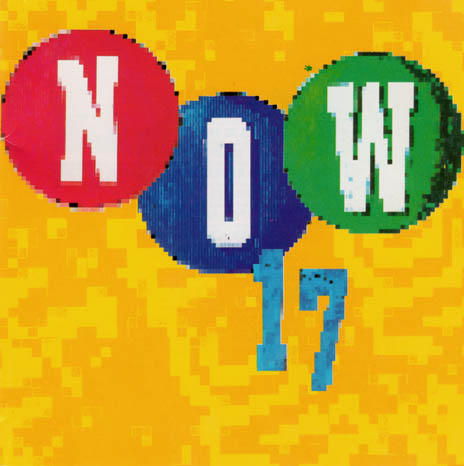
    Now_17As the first NOW album of the 90s NOW 17 promises much and delivers little, but it points the way to another world far removed from the Wet Wet Wets, Jellybeans and Johnny Hates Jazzes (?) of the late 80s. In terms of looking forward, NOW 17 gives over a whole side to the fast emerging indie-dance scene and almost all of sides three and four are dance orientated. Classic pop is curiously thin on the ground. There’s also the first computer-generated cover design. Yes… um… I’m sure in April 1990, this cover looked shockingly futuristic, reminiscent as it is of the first Doom, or Castle Wolfenstein video games; you can imagine it popping up as an end of level reward after you’ve mown down another 4,000 monsters. Also, intriguingly, “That’s What I Call Music” is almost an afterthought in the design. Had they finally cottoned on to the fact that nobody ever used the full title, so what was the point?

    The featured artists on the cover are a curious mix as well. For a hip, happening pop compilation released at a time when the charts were filled with ecstasy-laden folk in Global Hypercolour t-shirts and tie-dye flower strewn hoodies, the big draws on NOW 17’s cover still include Phil Collins, UB40 and Tina Turner. His Satan-ness Cliff is on here too, but that keep that one as an evil little surprise.

    Side one provides your pop injection. Erasure’s Blue Savannah has always been on my hate-list for reasons I’ve never quite fathomed; it remains there still, a dreadful way to start the album. Rebel MC’s Better World is, um, better, but is a poor follow-up to the superior Street Tuff. It only just scraped into the top 20, and only one more hit was forthcoming (Tribal Base in 1991; no, me neither). Paula Abdul’s Opposites Attract is brilliant however, and may have actually improved with age. A wonderfully upbeat rap number for the masses, it has got a small tinge of 1989 about it (but far less than some other tracks on show here) but as a party tune it’s damn good.

    I’m sure there is a joke about his name, but I’m not making it

    Also damn good is Beats International’s Dub Be Good To Me, which should have opened the album. It’s one of only two number ones on NOW 17, but also one of the few outright classics. Still sounding refreshing today, its brilliance lies in the ability to find disparate samples which somehow work together (a trick Norman Cook would continue to have enormous success with as Fatboy Slim) and combining that with a wonderful vocal from Lindy Layton. I’m baffled as to why her solo career never took off, despite Fatboy’s help. I’m also baffled by karaoke kings UB40’s continued chart success into the 90s. By 1990 they were only capable of having hits with other people’s songs, so they continued to churn out a succession of their Labour of Love albums at a rate of about one a month. Kingston Town has been performed worse at your local pub, but not by much.

    Thankfully the world was about to be saved by Candy Flip and their Funky Drummer-led version of Strawberry Fields Forever. I’ve never been able to make my mind up about this track. Not then, when I was no doubt the target audience for it, or now when I’m a cynical, dried up husk of a man writing a sarcastic blog about how crap pop music is. I’m supposed to say how depressing it is that a group of fly-by-night kids and (no doubt) a producer with his eye on a quick buck desecrated a classic song in a trendy and wholly inappropriate way. But of course that’s utter nonsense. I’m not a fan of the Beatles’ original version anyway, which in itself was a cynical pocket money grabbing exploitation of the burgeoning late 60s drug scene, so I don’t really give a toss about Candy Flip ruining a great piece of art, because it wasn’t a great piece of art to start with. So the only concern is, is it listenable? Well, just about. It flip-flops from crass to genius with just about every drum beat, but it is a slice of 1990 that says a lot about the record industry’s desire to cash in on what the Stone Roses/Happy Mondays had started the year before. Candy Flip wouldn’t be the last act to be seduced and abandoned by the industry chasing the batik and loon-pant wearing pound, and Manchester and baggy burned out almost as quickly as it started (see also Flowered Up, The Soup Dragons, Mock Turtles et al) and at least the band had a successful afterlife, going on to work with the likes of The Charlatans and Robbie Williams, and two of them went on to form the criminally underrated Sound 5.

    Drug addled pop for ver kids, man. Or something.
    We never had Twitter and the Facebooks. We had to make do with this.

    To follow that, we get sensible, but dull, tracks from Tina Turner and Phil Collins, who tries to perk up I Wish It Would Rain Down by chucking in a gospel choir and an axe-wielding Eric Clapton. It doesn’t work.

    It’s odd to think that side two of NOW 17 is probably the most defining side of NOW in my musical education. I didn’t realise it at the time (probably because I didn’t own the album) but pretty much every track here would point forward to the next decade of my record buying. In terms of legacy, it’s probably second only to the House/Hip hop side of NOW 11 as being about as zeitgeisty as one side of a pop compilation can get. They screwed it up a bit by including The Quireboys, but there you go. In my head this was the sound of summer 1990, yet every track was released between January and April. The opening trio of Step On, Loaded and Enjoy the Silence is about as esoteric as NOW had ever been since Dr Mabuse on NOW 3. These are classics that still stand up today; yes, Step On may be a bit hoary now, but at least it will still get you dancing. The version on NOW 17 is the 7 inch single version. It’s notably different to the most commonly heard version now, the one found on Pills, Thrills and Bellyaches, and all their compilations, which is over a minute longer.

    Don't do drugs kids, etc...
    National Treasure

    Following those three titans of indie-dance, we find a minnow of the form, Jesus Jones. Now pretty much forgotten in their native UK, they did hit it big in the USA when Right Here Right Now was used to soundtrack SCUD attacks on Iraq on CNN during the first Gulf War. Classy. EMI had high hopes for the group, seeing them as their meal ticket into the alternative scene, at the expense of several other acts, including a new group they had just signed called Blur, who are notable by their absence from NOW albums for quite a while… Real, Real, Real is a fair track that sounds like a watered down version of something Pop Will Eat Itself may have been knocking out a few years previous, or a cleaned up Carter USM track. Inoffensive chart-friendly unit shifter and nothing more.

    The Inspiral Carpets were drifting into similar territory after a few years in the indie salt mines. Pretty much every group from within 30 miles of Manchester, with a pudding bowl haircut and jeans the size of a tent, was getting offered a record contract. The Inspirals at least stayed with an indie label and had a sound of their own. Clint Boon’s Hammond organ was much imitated, but he was the one who brought it back from obscurity. Hitting number 14, This Is How It Feels remains their most popular hit, even if it was surpassed, in chart terms anyway, by Dragging Me Down a few years later. On NOW 17, the track appears in its radio-friendly version, replacing the explicit lyric about the ‘guy from the top estate’ chucking himself under a train.

    Chucking yourself under a train is, coincidentally, the thing that Guy Chadwick most sounds like he wants to do when singing for The House of Love. Often lumped in with the shoe-gazing crowd who found themselves sucked into the baggy vortex for a while (see also the exceptional Ride, and the not quite so exceptional Birdland), House of Love are one of the more unusual acts to grace a NOW album, a bit like seeing Tom Waits on a chill-out compilation. Shine On is a brilliant tune, probably their most well-known, and a remix of their debut single from 1987. Such wonderful song writing and talented musicianship would ultimately lead to internal fighting, booze and drugs, and everything else that stops greatness from pushing through into mainstream success. Shame.

    Faith No More’s From Out of Nowhere comes from out of nowhere (sorry) and is a bit of a barn-storming relief after all that depression. It’s never been my favourite Faith No More track, but I’ve learned to appreciate it over the years and it’s certainly impossible to ignore. I’d rather ignore The Quireboys, who close off side two though. You know those bands that make a career out of ripping off another band, like Oasis did? Well, The Quireboys did that with The Faces, seemingly just because the singer sounds like Rod Stewart (and he does a bloody good job of it, too). They had a ridiculous name which ensured no kid could admit to liking them (at least at my school) without being accused of liking ‘queer boys’. They did have one good song, 7 O Clock, but that’s not the track here. Here we’ve got Hey You, and it’s a dreary, pub piano dirge that’s all roll and no rock. Imagine Rod Stewart singing a Chas n Dave number, and you’ll be almost there.

    The leather trouser makes an ill-advised comeback to the charts.
    No caption I write can be funnier than this image is on its own

    After giving us a taste of where NOW would go later in the decade, with what is probably best described as the “Indie Ghetto” (which of course, would end up redefining the term ‘indie’ to mean a sound rather than music from independent labels; acts as diverse as Kylie Minogue, The Prodigy and Bjork were all strictly indie), the second half of NOW 17 gives us the more troubling path for the series. Or to put it another way, it’s the reason why everyone, except some absolute die hards, ultimately abandon the series to seek pleasures elsewhere: pop music becomes annoying.

    For reasons unknown (probably money, most things are), or better discussed by people who know about this kind of thing, pop music changed in the 1990s. I know they say that about every decade, but the status quo that had been in place since the early 60’s was pretty much abandoned by the decade’s end. Pop bands were replaced by pop producers. Pop has always had its svengalis from Brian Epstein and Andrew Loog Oldham, through Mickey Most, Pete Waterman all the way up to Simon ‘666’ Cowell. But now, the knob fiddlers were coming to the fore, thanks to cheap equipment and a succession of cheaper guest vocalists. They became the new pop stars, and groups were pushed into the shadows again. Think about it: pretty much any guitar-based band now is classed as an ‘indie’ band or an ‘alternative’ band, even if they are as successful as Muse or Coldplay. The only exception to this are bands aimed specifically at kids, like McFly and Busted, but that boat sailed swiftly by and now we’re back to pretty, non-threatening boys sitting on stools singing about kittens. Just like Garage (a term from the 60s), Indie and Alternative would soon no longer mean what they used to, and soon they would be followed by R n’ B and House too. Faceless (or anonymous faced) dance music would soon rule the roost. Sides three and four of NOW 17 are almost exclusively like this. That in itself isn’t necessarily a bad thing. We are, in 1990, a few scant years away from the Superstar DJ era, where Carl Cox, Chemical Brothers and Norman Cook were as popular as the boy bands they battled with for chart supremacy. But this is the start of that path, so instead we get a very rum bunch indeed.

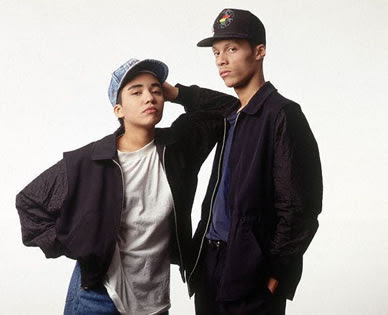
    Ya Kid K and MC Eric. You remember them, don't you?
    Ya Kid K and MC Eric. You remember them, don’t you?

    Take Technotronic… please! (boom, boom). This Beat is Technotronic is just Pump Up the Jam Part Two. In fact it IS Pump Up The Jam, just with different lyrics, sung by someone called DJ Eric. At least Lonnie Gordon’s Happening All Over Again is a great tune, one of Stock, Aitken and Waterman’s last big hits, but also one of their best. It’s probably their most successful attempt at recreating that classic disco sound for the 1980’s, sadly a year too late. Unsurprisingly the song had been written for Donna Summer, with whom they had a brief collaboration, but they had a falling out with the disco diva they did the next best thing and got a younger (and no doubt cheaper) looky-likey. I was convinced as a teenager that Gordon, like Summer, was in fact an old disco songstress that SAW had rescued from obscurity, but no; she was a just your standard session singer who happened to get noticed by the Hit Factory. As is so often the case, Gordon never capitalised on the top 5 success of this excellent track and the dumper beckoned.

    Disco morphs into Hi-NGR with Jimmy Somerville and Cliff Richard (separately, sadly). Read My Lips is a much better plea for sexual tolerance than the awful There’s More To Love (featured on NOW 12) and continues the brash fabulousness of Somerville’s earlier cover of Sylvester’s You Make Me Feel (Mighty Real), a top 10 hit which would have sat much better on this album.  In a similar vein is Cliff’s Stronger Than That, the best track from the album of the similar name. That doesn’t mean it’s any good, because it’s not, but it doesn’t make you want to murder people who were to play it like you did when you heard I Just Don’t Have The Heart (see NOW 16).

    The anonymous side of things come into play next with the 49ers forgettable Don’t You Want Me, Jamtronik’s awful dance version of Phil Collins’ Another Day in Paradise, and the strange, if not exactly pleasant, JT and the Big Family’s Moments in Soul.

    Jamtronik represent a virus that spread across the charts in the 90s and is a throwback to the days of the Top of the Pops and Hot Hits albums: the cheap, nasty cover version knocked together, probably, in a couple of hours. The difference between these bikini-clad clones and those the 1970s (apart from the fact that quality dolly birds like Mary Millington and Caroline Munro were absent) is that they were dance versions, sounding like they’d been knocked up with a £50 Casio keyboard and an Atari ST computer, so they didn’t even have to sound that much like the original. Another Day in Paradise is one of the most offensive singles ever recorded anyway: multi-millionaire pop stars should not make more millions by exploiting other people’s problems, not unless they are prepared to do something about it.  This wasn’t a charity record, remember. So, a dance version, for pilled up clubbers, of a trite, opportunistic ode to Britain’s disposed, written by a man who could solve problems like this with a quick waft of his tax-avoiding chequebook? Sorry, got nothing spare, mate.

    This image really needs a funky house beat. Ah yeah.
    This image really needs a funky house beat. Ah yeah.

    Moments in Soul is slightly odd though and that makes it worth a listen. A kind of dance megamix of recent hits, it manages to combine Art of Noise’s glorious Moments in Love, Soul II Soul’s Back to Life and Milli Vanilli’s Girl You Know It’s True into something listenable. Moments in Love seems an odd basis for the track, being 8 years old by this point, and strangely never a top 40 hit despite several rereleases. Side 3 does close on a high note, thanks to the still brilliant Got To Have Your Love from Mantronix. The production may date this a bit (particularly the horrible synthesised horns) but it’s a pretty great track all the same.

    Side four is a similar hotchpotch of the good, the bad and the ugly. The good is supplied by Adamski’s Killer, featuring, or course, a very uncredited Seal; Orbital’s Chime, giving little indication of the influence they would have over UK dance music for the next two decades; and Electribe 101’s Talking With Myself. Add in E-Zee Possee (sic) featuring MC Kinky (!) with Everything Starts With An E, which sounds nowhere near as dreadful as I thought it would, despite loving it in my teens, and side four looks like it might be shaping up pretty well. But deep and frightful horror awaits.

    Side four begins with Bizz Nizz (an act who somehow managed to be one of the featured artists on the cover) with Don’t Miss the Partyline. Like many dance artists who would appear on NOW albums, this was Bizz Nizz’s only hit, and it did well reaching number 7. But it’s utter crap. And not in a novelty record kind of crap. It’s lazy, money-grabbing, soul-less crap. You think Simon Cowell has the monopoly of conning the kids out of their paper round cash with insipid rubbish (and I do)? Well, he’s only doing what Euro-dance producers (and a few UK ones) have been doing for years before. Partyline features a very basic keyboard melody of about three notes, crowd noises, and a bloke (presumably, a DJ) shouting about the Partyline (this was the golden age of late night TV-advertised chat lines, maybe that was the market they were tapping) and the occasional “are you ready?”. Techno was still in its infancy, so this kind of Diet Techno cleaned up on the charts at the time, being much easier listening (and radio-friendly) than the likes of LFO. And you know what else makes this so dreadful? The guys behind it went on to create 2 Unlimited. Be afraid…

    The rest of side four is never as downright nefarious as that, but is a showcase of where 1990’s dance scene was at: in the toilet. Well, that’s the impression given here anyway. I can’t really say how representative it is.

    D-Mob’s Put Your Hands Together sounds a year too old to be in this company; Tongue N’ Cheek’s Tomorrow is so utterly forgettable I’ve listened to it at least ten times preparing this review and still can’t remember a thing about it; and the least said about Sydney “Who?” Youngblood’s awful cover of I’d Rather Go Blind the better, except it’s probably the worst cover version NOW has featured thus far. And the worst album closer so far, to boot.

    It must be said, NOW 17 does do a great job of capturing the chart mood of the first third of 1990. It’s as disparate and confused as the charts themselves, as maybe it should be. If the kids were strating to buy into the ‘alternative’ (both indie and dance) then where was that going to leave the pop staples like Stock, Aitken and waterman, Cliff, Tina Turner… maybe even Erasure?

    As I said earlier, pop was changing, becoming more fractured than ever before, with more genres and sub-genres. NOW was never going to be able to provide an accurate cross-section of the popular movements as it tried to here. A break was once again required, and there would be no new NOW album in the summer of 1990. Christmas would see its return, along with a bold, and potentially disastrous, new look. It was time to wave goodbye to NOW’s balls.


    NOW THAT’S WHAT I CALL MUSIC 17

    Release date

    23rd April 1990

    Biggest tracks

    Dub Be Good To Me – Beats International

    Killer – Adamski

    Step On – Happy Mondays

    Loaded – Primal Scream

    Forgotten tracks

    Got To Have Your Love – Mantronix

    Opposites Attract – Paula Abdul (MC Scat Kat is not credited…!)

    Track listing

    Side One
    Blue Savannah Erasure
    Better World The Rebel MC
    Opposites Attract Paula Abdul
    Dub Be Good To Me Beats International feat. Lindy Layton
    Kingston Town UB40
    Strawberry Fields Forever Candy Flip
    I Don’t Wanna Lose You Tina Turner
    I Wish It Would Rain Down Phil Collins
    Side Two
    Step On Happy Mondays
    Loaded Primal Scream
    Enjoy The Silence Depeche Mode
    Real Real Real Jesus Jones
    This Is How It Feels Inspiral Carpets
    Shine On House Of Love
    From Out Of Nowhere Faith No More
    Hey You (Live) The Quireboys
    Side Three
    This Beat Is Technotronic Technotronic featuring MC Eric
    Happenin’ All Over Again Lonnie Gordon
    Don’t You Love Me The 49ers
    Read My Lips (Enough Is Enough) Jimmy Somerville
    Stronger Than That Cliff Richard
    Another Day In Paradise Jam Tronik
    Moments In Soul J T & The Big Family
    Got To Have Your Love Mantronix Featuring Wondress
    Side Four
    Don’t Stop The Partyline Bizz Nizz
    Everything Starts With An ‘E’ E-Zee Possee
    Put Your Hands Together D-Mob & Nuff Juice
    Killer Adamski Featuring Seal
    Chime Orbital
    Tomorrow Tongue N Cheek
    Talking With Myself Electribe 101
    I’d Rather Go Blind Sydney Youngblood


  • NOW 14 – On and off and on again

    NOW 14 – On and off and on again

    Now_141989 was a year of major upheaval for NOW. They’d been turfed out of the official album charts into the compilation top 20, a chart no one ever saw, referenced or cared about. It looked like they’d seen off their biggest rival, the Hits Album series, whose disastrous rebrand around Christmas 1988 had seen sales plummet, whilst NOW’s corresponding NOW 13 had gone on to be one of the biggest selling albums of the year. (Hits would not die quickly however, but a series of rebrands, reboots and revisions would mean it was never a serious competitor again.)

    Although they probably never noticed, or cared, NOWs 12 and 13 had been pretty dreadful, at least looked at from a distance of 25 years as I’m smugly doing now. Honestly, could these people not see that two and a half decades later their obsession with Jellybean and Johnny Hates Jazz was going to look ridiculous? This is why I should be running a major record label, rather than being all picky and sarcastic about them from the comfort of my computer.

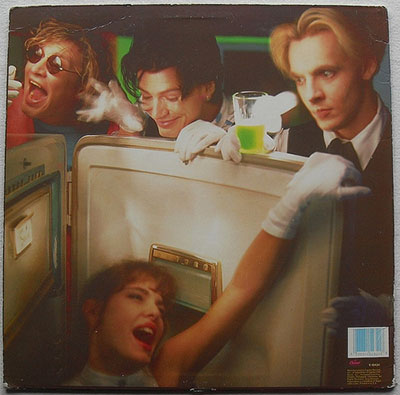
    NOW 14 feels much fresher, more exciting, than the turgid NOW 13. Ballads are few and far between, and a couple of tracks qualify as outright classics. There are also a couple of huge hits that have certain “huh?” factor about them. Cover versions abound again, but at least this time they are interesting and, more importantly, good. This may also be the first NOW album to feature a shockingly blatant piece of product placement. I was never entirely sure what was going on with that cover though. Any ideas?

    As usual, the opening to a NOW album is pretty good. Marc Almond’s brilliantly overblown cover of Something’s Gotten Hold Of My Heart (duetting with Gene Pitney, who despite rumours to the contrary was NOT the original artists to record it; that honour falls to David and Jonathan (?)) was perhaps a surprise hit, but history tells us it was an appearance on Terry Wogan’s chat show what won it, and sent hordes of baby boomers to Our Price to buy it. When you think of the crap that Wogan has plugged on his Radio 2 show over the years and turned into hits this kind of lets him off the hook. The nostalgia continues with Phil Collins’ Two Hearts, the second track to be released from the Buster soundtrack, a film where he gave a reasonable performance as an actor portraying a vicious East End gangster with a heart of gold (and probably loved his dear old mum). Two Hearts was an even bigger hit than its predecessor, A Groovy Kind Of Love. Well, it was everywhere except in the UK. Although an original composition, it shamelessly riffs on 60s Motown, sounding exactly like his earlier cover of You Can’t Hurry Love, a fact acknowledged in the video for this, where he again plays every member of a band. It’s a pop song you dearly want to hate but can’t. Unlike Erasure’s Stop! Which is a fantastic pop song which, had it not been released at Christmas, would have easily been a huge number one.

    Surprisingly not a number one was Bananarama’s Help! The band never had a number one in the UK, not even with this charity record at a time when anything charity related would be top of the charts in pre-orders alone. Backed by French and Saunders (and Kathy Burke) as Lananeeneenoonoo, a good natured pastiche of the band they’d performed on their TV show, Help! Is a reasonably shoddy treatment of a great song, with humour that doesn’t translate without the video, and even then it’s not particularly funny.

    Consider my ribs thoroughly untickled

    Hue and Cry’s Looking for Linda is much better, a nice surprise given it’s a song (I think) about an alcoholic woman fleeing an abusive relationship. Yeah, go pop! It does signal the inevitable drift towards the centre of the record, which continues with Yazz’s lovely, dreamy Fine Time. Her last top ten single, it’s very far removed from the Hi-NRG dance of her earlier hits, and it shows there was more to her than smiling and punching the air. Sadly, the public wanted her smiling and punching the air. Kim Wilde’s late 80s comeback continues with the anonymous Four Letter Word, before the side ends with the still amazing Stop from Sam Brown. The first time two different songs with the same title have appeared on the same NOW album, fact fans.

    Side two is again an attempt to collect together rock tunes, so of course it starts with Roy Orbison. You Got It is still pretty good, though to be fair, The Big O could sing Crazy Frog and make it sound great. Fine Young Cannibals returned in style with She Drives Me Crazy, a song that has now, very rightly, achieved legendary status, and another song on NOW 14 that you won’t believe didn’t get to number one. Like INXS’ Need You Tonight, which the foolish British record buying public needed TWO attempts to get it into the charts; it had originally stalled on number 58 when released in 1987. In one of the sloppiest errors on a NOW album ever, the end of the song (“You’re one of my kind”) is rather ignobly chopped off chopped off and the anticipation of the payoff is replaced by the introduction of Status Quo’s horrible Burning Bridges (On and Off and On Again). I’ll never understand why this track was such a big hit, but it’s becoming clear to me that the 80s record buyer would buy any old crap with a dreary, repetitive chorus that sounded like something from the terraces at Stamford Bridge. Interestingly, the song would gain a second life, in 1994, as a football chant, when the famously Spurs-supporting band took a big sack of Old Trafford cash to re-record the song with different lyrics for Manchester United, scoring a number one in the process. Unforgiveable.

    Status Quo

    I never thought I’d say it, but thank God for Then Jericho. Big Area was one of only two top twenty hits the band had (The Motive (Living Without You) being the other), and frankly, they should have been massive, managing to combine hard rock, pop and stadium sized tracks to surprisingly good effect, the best bits of Big Country, U2, Simple Minds and countless other bands they often get confused with (Cutting Crew, The Alarm). They had an added touch of glamorous sex appeal from lead man Mark Shaw, whose ego got the better of him (hey, sleeping with Belinda Carlisle will do that to the best of men) and he left the band in the lurch for a (no doubt) hefty solo contract with EMI. Where for art they now? The Butlins nostalgia tour and Shaw sometimes performs in an 80s ‘supergroup’ that includes Tony Hadley, Paul Young and Fish!

    (As a side note, while preparing this review I happened to catch a dreadful piece of TV about talent shows, which featured clips from Reborn in the USA, a show where 80s pop stars were sent on a tour of the States to try and revive their careers. Mark Shaw was one of the participants and was, undeniably, an arse. It seemed his only ally was one Tony Hadley, so maybe their supergroup fortunes were forged on that fateful and, for Shaw at least, truncated road trip.)

    Morrissey’s Last Of The International Playboys seems thoroughly out of place in this testosterone-fuelled, denim-clad company (though I’m sure many would argue he could challenge Mark Shaw in a “being an arse” competition). It’s a song I loved as a kid but now sounds very Second Division in Moz’s discography. Poison were always a bit Second Division in everything, and Every Rose Has It’s Thorn is an utterly dire attempt at a rock/country knock off of Guns n’ Roses.

    The first half of NOW 14 closes with possibly the most forgotten number one in the series so far. Even telling you it was Simple Minds’ only number one will not nudge your brain any. Belfast Child is, frankly, odd. This song has no business being a single, let alone a chart-topper. It’s trite, depressing, mawkish, of questionable judgement and, for the first half, almost listenable. I just don’t get it; maybe someone who bought it can enlighten me.

    Thankfully, side three brings back some fun to proceedings, providing our dance tunes for this episode. Neneh Cherry’s Buffalo Stance is still great, and Inner City’s Good Life sounds a lot better to my ears now than it did back in the day. I wasn’t a huge hit in 1989, but it’s aged well and still sounds surprisingly contemporary. Sadly, I can’t say the same for S-Express’ Hey Music Lover which is still good fun, but is let down by cheap 80s production far removed from the slickness of Theme from S-Express or even Superfly Guy (which failed to appear on a NOW album, sadly). Quite what Living In A Box are doing mixed up on this side is anyone’s guess, but here they are. Blow The House Down is a good, efficient, pop-dance track but is instantly forgotten long before it finishes. Thankfully this would be the last appearance for the Paul Weller imposter, as The Style Council sign off with their farewell single, Promised Land. No, I didn’t remember it either.

    Two brilliant, and very different, songs follow. Adeva’s stunning cover of Respect is up first, and it is bound to polarise opinion. Made famous (but not originally recorded) by Aretha Franklin, I must confess I hated this back then, really despising it. I now feel I was too hasty. If there’s one thing I can’t stand it’s cover versions which just replicate the original song. Adeva’s version of Respect is as different from Aretha’s version, as Aretha’s version is different from Otis Redding’s version. It certainly doesn’t replicate anything, though I’m not sure exactly what it does do, but it’s one of the most radical cover versions I’ve heard for a good long while. As brave as Scissor Sister’s version of Comfortably Numb, but without the camp theatrical winks, this is an artist saying “I’ve got the balls to take this classic track, and do it MY way, and screw you all!” It’s got a bit of a strange time signature and no melody, Adeva changes the lyrics, scats over parts of it… Bar the late 80s tinny drums this would be considered a classic. I love it.

    I also love Tone Loc’s Wild Thing. Not a big hit in the UK (it only reached number 21) it still kills with its drumbeat and sparse guitar stab melody (mostly stolen from Van Halen’s Jamie’s Cryin’), it also manages a nice line in self-depreciation: in two verses, Mr Loc fails to do the wild thing. The song feels like a humorous jibe at some of his contemporaries’ obsession with sex, but probably ended up becoming a template rather than a warning.

    Some wild things, yesterday

    Side three finishes rather oddly with Natalie Cole’s dreadful, turgid I Live For Your Love, which I hadn’t heard since I bought this album 24 years ago. It features a rather strained vocal performance from the talented Ms Cole, and is nothing to write home about. On the CD version of NOW 14, I Live For Your Love provides the stepping stone from the dance tracks into the balladry to follow, another indicator of the programming more for CDs than just the album and cassette versions.

    The biggest track on NOW 14 is not very well remembered now, but in 1989 Robin Beck’s The First Time was huge (or at least it was when it came out in late 1988). You may be struggling to remember it now, so why not have a sit down and pour yourself a brand-leading cola beverage and have a think. NOW 14 even provides you with a handy little advert next to Ms Beck’s mugshot for said fizzy, brown, tooth-rotting liquid. Having been played in Coke ads relentlessly for six months prior to release (and it seemed for months afterwards too!), I’m not sure it was necessary for NOW to include the product logo in the inner sleeve to remind listeners where it was from, but then it’s more likely it was Coke’s decision rather than NOW’s: “You want one of the biggest, most globally recognised songs of the year? Fine, but stick this half inch ad in your sleeve or no dice” was probably the conversation had between two fat men in pinstripe suits smoking cigars. It doesn’t matter whether The First Time is any good or not, but for the record it’s not. The fact that Ms Beck would never have another single (or even release an album in the UK) leads me to suspect she may have had a sex change and become a global superstar all over again, as Beck, though that may be a lie.

    Robin Beck

    Another track impossible not to include was Paula Abdul’s Straight Up. Now best known as a Simon Cowell hand puppet, Abdul had been THE go to choreography for the great and the good in the 80s (including Whitney and Madge). Straight Up was a surprisingly edgy debut single which still sounds great, and was wildly different to most mainstream pop-dance at the time. It had only just been released at the time of NOW 14’s appearance in the shops, so this was THE hot track on the album, so why it was buried away here god only knows. She never successfully followed through on this though, becoming a less-popular Gloria Estefan (flitting between forgettable pop and dreary ballads; come to think of it, pretty much like Jon Bon Jovi too). There was Opposite Attract, which we’ll come to on a later album, but we all know that MC Scat Cat was the true star of that one.

    Sam Fox’s I Only Want To Be With You is a Stock, Aitken, Waterman-produced abomination which warrants no further coverage here. But it does lead us into the pop-dumping ground of the remainder of side four. The biggest surprise here is, again, Brother Beyond. As with their appearance on NOW 13, I was shocked at how un-dreadful Be My Twin is. It’s teenage pop for sure, but it’s a bit more sophisticated, and shows a lot more pop nous, than the over-produced TV pop the kids get served up nowadays. What I’ve realised about Brother Beyond is, although the guiding hand of SAW hangs over their shoulder (the Hit Factory viewing them as a Bros sized meal ticket), they wrote all their own material. Be My Twin is therefore more reminiscent of, say, The Blow Monkeys than Bananarama, and as a result has aged much better. It’s a shame that they are now considered boy band has-beens as they, on this showing at least, had far more to offer than the Brothers Goss (and Ken). One of the band is now a massively successful writer, working with the likes of Adele, and won an Ivor Novello for Will Young’s Leave Right Now. What’s Matt Goss written recently, apart from his housing benefit application?

    Those perennial writers Climie Fisher return for the last time with the disappointing Love Like A River. It seems odd that the same pens that write Love Changes Everything could also write this, but you can’t win them all. It would appear their star was fading faster than anticipated. Duran Duran’s star had faded more than most, and All She Wants Is would prove to be their last top ten hit for a long while (they would manage just two more over the next two decades). A truly great song that sounded unlike anything else they’d ever done, and, to be honest, anything else tearing up the charts at the time. Looked at with modern ears (if you can look at something with your ears) you could argue it pointed the way to the likes of Curve and Nine Inch Nails, with its crunching guitar and industrial beat. Duran Duran, the forefathers of Industrial? I’m sure they’d rather that title than ‘the band The Killers wish they were’.

    The Duranies appearance on Celebrity Masterchef did not go well

    80s survivors Level 42 are still hanging around with Tracie, a jolly but uninspiring midlife crisis ditty, before we reach the bitter end of NOW 14, Michael Ball’s Love Changes Everything. No relation to Climie Fisher’s epic pop anthem, the title was pilfered by Andrew Lloyd Webber for his latest blockbuster West End show, Aspects of Love. Despite the song being one of his biggest chart hits, the show itself was a huge flop, remembered more for the fact that Sir Roger Moore was meant to be in it, but pulled out at the last minute. All is, of course a massive star (if you like that kind of thing; personally I’d rather do something unpleasant to my private area than ‘take in a show’) and a huge talent, but this song is so dull you can almost hear Ball sighing “really, this is the best you can do, Webber?” at some of the lyrics. He doesn’t sound as if he’s particularly interested in the song at all, or even bothering to make an effort, perhaps a result of having to reign in a big theatrical voice in the confides of a tiny recording booth. It’s a sorry end to NOW 14. Show tunes have no place on pop compilations (but this won’t be the last) and makes you forget the hard work the album had already put in to try and make up for the poor quality of its predecessors.

    NOW 14 to an extent, does redeem the series, but the same nagging doubts remain. What is pop doing? Where is it going?

    Two more NOW’s in 1989 would attempt to answer those questions and neither gets any closer to answering them. Speaking of answers… it’s supposed to be an art gallery


    NOW THAT’S WHAT I CALL MUSIC 14

    Release date

    20th March 1989

    Biggest tracks

    The First Time – Robin Beck

    Need You Tonight – INXS

    Somethings Gotten Hold Of My Heart – Marc Almond and Gene Pitney

    Lost gems

    Respect – Adeva

    Be My Twin – Brother Beyond

    Forgotten tracks

    Fine Time – Yazz

    Promised Land – The Style Council

    What’s missing?

    Angel of Harlem –U2

    Especially For You – Kylie Minogue and Jason Donovan

    My Prerogative – Bobby Brown

    I Don’t want A Lover – Texas

    Track listing

    Side one
    Something’s Gotten Hold Of My Heart Marc Almond & Gene Pitney
    Two Hearts Phil Collins
    Stop! Erasure
    Help! Bananarama
    Looking For Linda Hue And Cry
    Fine Time Yazz
    Four Letter Word Kim Wilde
    Stop Sam Brown
    Side two
    You Got It Roy Orbison
    She Drives Me Crazy Fine Young Cannibals
    Need You Tonight INXS
    Burning Bridges (On And Off And On Again) Status Quo
    Big Area Then Jericho
    The Last Of The Famous International Playboys Morrissey
    Every Rose Has Its Thorn Poison
    Belfast Child Simple Minds
    Side three
    Buffalo Stance Neneh Cherry
    Good Life Inner City
    Hey Music Lover S-Express
    Blow The House Down Living In A Box
    Promised Land The Style Council
    Respect Adeva
    Wild Thing Tone Loc
    I Live For Your Love Natalie Cole
    Side four
    First Time Robin Beck
    Straight Up Paula Abdul
    I Only Want To Be With You Samantha Fox
    Be My Twin Brother Beyond
    Love Like A River Climie Fisher
    All She Wants Is Duran Duran
    Tracie Level 42
    Love Changes Everything Michael Ball